Updated October 2026 · By the BGStraps team
Quick answer: most Omega watches take a 20mm or 21mm strap. The Speedmaster Professional and the 42mm Seamaster Diver 300M take 20mm, while the 43.5mm Planet Ocean takes 21mm. Choose rubber for water and summer, leather for the office and the vintage Speedmaster look, and a steel or Milanese mesh bracelet for an all-occasion finish. Any spring-bar strap can be swapped at home in a few minutes.
Few watches carry the weight of history the way an Omega does. From the Speedmaster that travelled to the Moon to the Seamaster on the wrist of every modern screen icon, these are timepieces built to be worn, used, and passed down. But the one part of an Omega that lives closest to your skin — the strap or bracelet — is also the part that wears out first.
Sweat, sunlight, saltwater, and years of daily flexing take their toll. A tired strap can make even the finest watch look neglected, while a fresh band can transform the entire character of the piece. The good news is that replacing an Omega strap is one of the simplest and most affordable ways to renew your watch, and it lets you tailor the look to your exact taste.
This guide walks you through everything you need to know before you buy: which strap size fits your specific Omega, how to choose between rubber, leather, and steel, and how to fit your new band correctly. Whether you own a rugged Seamaster diver or an elegant Aqua Terra, the right replacement is closer than you think.
Why Replace Your Omega Strap or Bracelet?
There are several reasons an Omega owner reaches for a replacement band, and none of them mean anything is wrong with the watch itself.
The most common is simple wear. Rubber straps eventually stiffen or crack, leather absorbs moisture and loses its finish, and even a steel bracelet can loosen at the links after years of service. A worn band is not just a cosmetic issue — a deteriorating strap is the single most likely point of failure that could see your watch drop from your wrist.
The second reason is versatility. A single Omega can play many roles depending on what it sits on. Your Seamaster looks purposeful on rubber for a day at the beach, sharp on steel for the office, and unexpectedly refined on leather for the evening. Swapping straps effectively gives you several watches in one.
Finally, there is value. Original Omega bands carry a premium price, and a high-quality aftermarket strap lets you refresh or reinvent your watch for a fraction of that cost, without touching the watch’s authenticity or resale value.
Finding the Right Strap Size for Your Omega
Getting the size right is the single most important step, and it comes down to one measurement: lug width. This is the distance in millimetres between the two lugs where the strap meets the case. Fit the wrong width and the strap will either pinch in or leave unsightly gaps.
If you are unsure how to take this measurement yourself, our guide on how to measure your watch strap walks through it step by step with a simple ruler. As a starting point, here are the widths most commonly found across the Omega range.
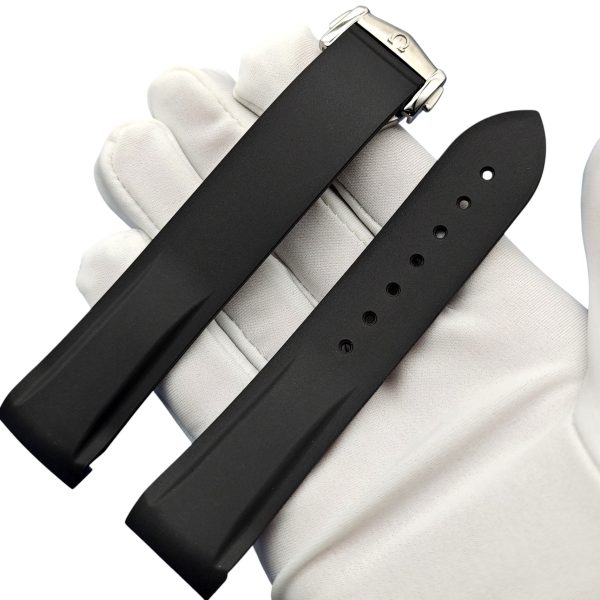
Seamaster
The Seamaster family is broad, so measuring is always worth it, but most modern Seamaster Diver 300M and Planet Ocean models take a 20mm or 21mm lug width, with larger 45mm Planet Ocean cases often moving up to 22mm. Because the Seamaster is a genuine dive watch, rubber is a natural and popular choice here.
Speedmaster
The classic Speedmaster Professional “Moonwatch” is famously a 20mm lug width, one of the most widely supported sizes in the strap world. This makes the Speedmaster one of the easiest Omega models to find replacement bands for, whether you favour a period-correct leather look or a modern rubber sports strap.
Aqua Terra
The Seamaster Aqua Terra usually takes 20mm on the 38mm case and 21mm on the 41mm case, with some smaller references using 19mm. The Aqua Terra’s dressier styling makes it equally at home on rubber, leather, or a matching steel bracelet.
The key takeaway: models within the same family can differ, and Omega has used several case sizes over the years. Always confirm your exact lug width by measuring before you order. You can browse everything that fits your watch on our dedicated Omega straps collection.
Choosing the Right Material for Your Omega
Once you know your size, the fun begins. Each material brings a completely different personality to the watch, and the best choice depends on how and where you wear it.
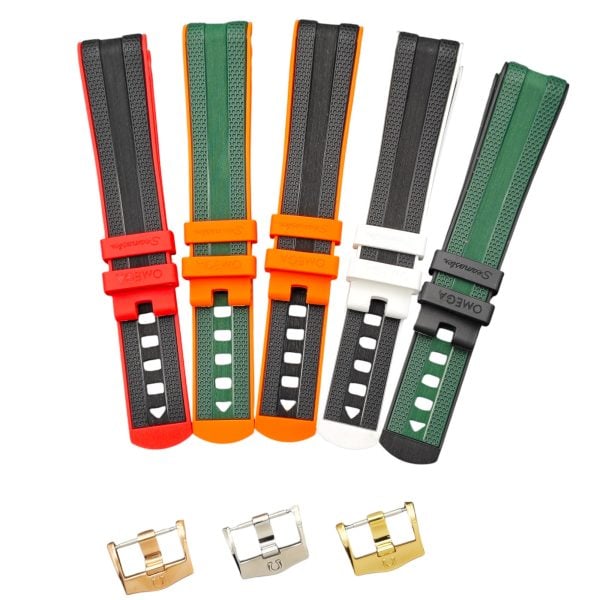
Rubber Straps: Built for the Water
Rubber is the natural partner for a dive watch, and it suits the Seamaster and Planet Ocean beautifully. A quality rubber strap is completely waterproof, resistant to sweat, salt, and UV, and requires almost no maintenance — a rinse under the tap is usually all it needs.
Modern rubber has moved far beyond the stiff bands of the past. Premium FKM and silicone straps are supple, comfortable straight out of the box, and often finished with textured or ribbed surfaces that echo Omega’s own sports designs. If you swim, dive, or simply live somewhere hot and humid, rubber is the practical and stylish choice. Explore the full range in our Omega rubber straps collection.
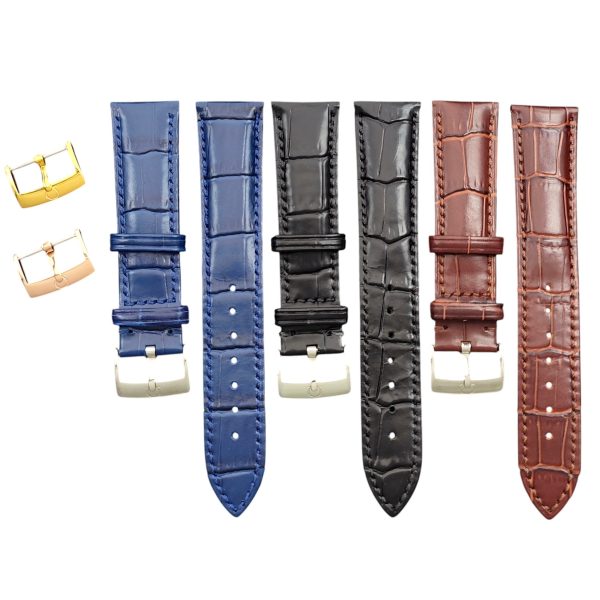
Leather Straps: Classic and Refined
Leather instantly dresses an Omega up. A stitched calfskin or alligator band turns a Speedmaster into an elegant everyday companion and gives the Aqua Terra a warm, sophisticated feel suited to the office or a formal evening.
The trade-off is care. Leather should be kept away from prolonged water exposure and will develop a personal patina over time, which many owners consider part of its charm. For heritage models in particular, a well-chosen leather strap is hard to beat. See the options in our Omega leather straps collection.
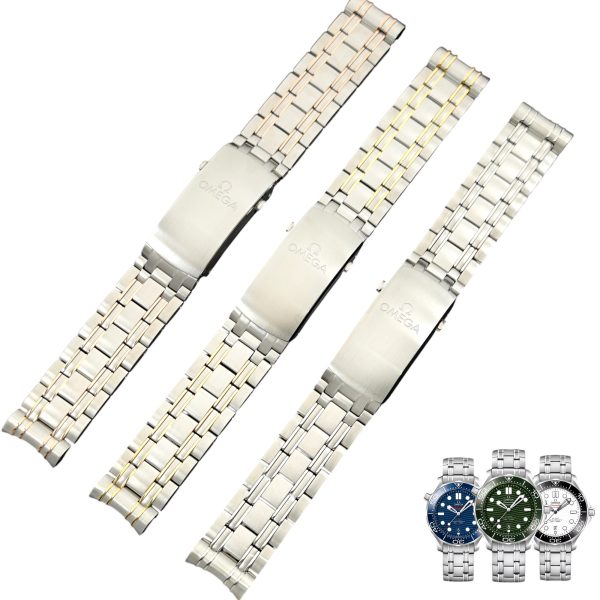
Steel Bracelets: The Integrated Look
For owners who want the original tool-watch aesthetic, a stainless steel bracelet delivers unmatched durability and a substantial, premium feel on the wrist. A well-made bracelet balances the weight of the watch and suits both casual and formal settings. Browse our Omega steel bracelets to match the finish to your Omega.
Canvas Straps: Casual and Rugged
If you want something with a relaxed, adventurous character, a canvas strap over a supportive base offers breathable comfort and a distinctive look that pairs especially well with sportier Seamaster models. Take a look at our canvas straps for warm-weather and off-duty wear.
How to Fit Your New Omega Strap
Changing an Omega strap at home is straightforward with the right tool and a little care. You will need a spring bar tool, a soft cloth to protect the case, and a few minutes of patience.
- Protect your watch. Lay it face-down on a soft cloth or microfibre pad to avoid scratching the case or crystal.
- Remove the old strap. Slide the forked end of the spring bar tool between the strap and the lug, catch the shoulder of the spring bar, and compress it inward. Once one side releases, the strap lifts away easily. Repeat on the other side.
- Fit the new strap. Insert one end of the spring bar into its lug hole, compress the other end with your tool, and guide it into the opposite hole. You will feel and hear a small click as it seats.
- Check it is secure. Gently tug the strap on both sides to confirm both spring bars are fully locked before wearing the watch.
If your replacement uses a folding or deployment clasp, adjust the fit using the clasp’s micro-adjustment holes rather than forcing the strap. Take your time — a secure fit is what keeps a valuable watch safely on your wrist.
Refresh Your Omega Today
An Omega is designed to last a lifetime, and choosing the right replacement strap keeps it looking and feeling its best for years to come. Start by measuring your lug width, then match the material to your lifestyle: rubber for the water and the heat, leather for classic elegance, steel for the original look, and canvas for relaxed everyday wear.
Whether you’re reviving a well-loved Seamaster or reinventing a Speedmaster with a fresh look, the perfect band is waiting. Explore our full Omega replacement strap collection and give your watch the second life it deserves.
All our Omega strap guides
This page is the starting point. Each guide below goes deeper into one watch or one question:
- Seamaster: Omega Seamaster strap guide: rubber, steel, leather and fabric
- Speedmaster: Omega Speedmaster strap guide: leather, steel, NATO and rubber
- Bracelet sizing: How to adjust an Omega bracelet
- Changing straps: How to change an Omega strap
- Rubber: FKM vs silicone rubber straps
- Shop: Omega rubber straps · Omega leather straps · Omega bracelets
Frequently asked questions
Are Omega watch bands interchangeable?
Straps are, as long as the lug width matches: a 20mm strap fits any 20mm Omega. Bracelets are less flexible, because the end links are shaped for a specific case, so check the compatible references before buying one.
What size strap does an Omega Speedmaster take?
The 42mm Speedmaster Professional Moonwatch takes a 20mm strap.
What size strap does an Omega Seamaster take?
The 42mm Seamaster Diver 300M takes 20mm and the 43.5mm Planet Ocean takes 21mm. Other Seamaster models vary, so measure between the lugs to be sure.
Can I change my Omega strap myself?
Yes. Most Omega straps are held by spring bars, so a spring bar tool and a soft cloth are all you need. The swap takes a few minutes.