One of the most common reasons a new strap looks wrong is nothing to do with colour or material — it is the end shape. Some watches accept a standard straight-end strap; others demand a curved end cut to the exact case, or the strap will leave an ugly gap at the lugs. Getting this right is the difference between a strap that looks factory-fitted and one that looks like an afterthought. Here is how straight-end and curved-end straps differ, which watches need which, and how to tell before you buy.
Straight-end straps: the universal option
A straight-end strap has a flat, squared-off end where it meets the case. It attaches with a standard spring bar and fits the majority of watches — anything with conventional lugs and an open gap between them. Because the end is straight, the only measurement that matters is the lug width: get that right (18mm, 20mm, 22mm and so on) and the strap will fit. This is why straight-end straps are the most versatile and interchangeable option, and why a single strap can move between several watches that share a lug width.
The trade-off is that on a watch designed for a fitted end, a straight strap can leave a small gap between the strap and the case — fine on a traditional dress or field watch, but wrong on a case built to flow into its band.
Curved-end straps: shaped to the case
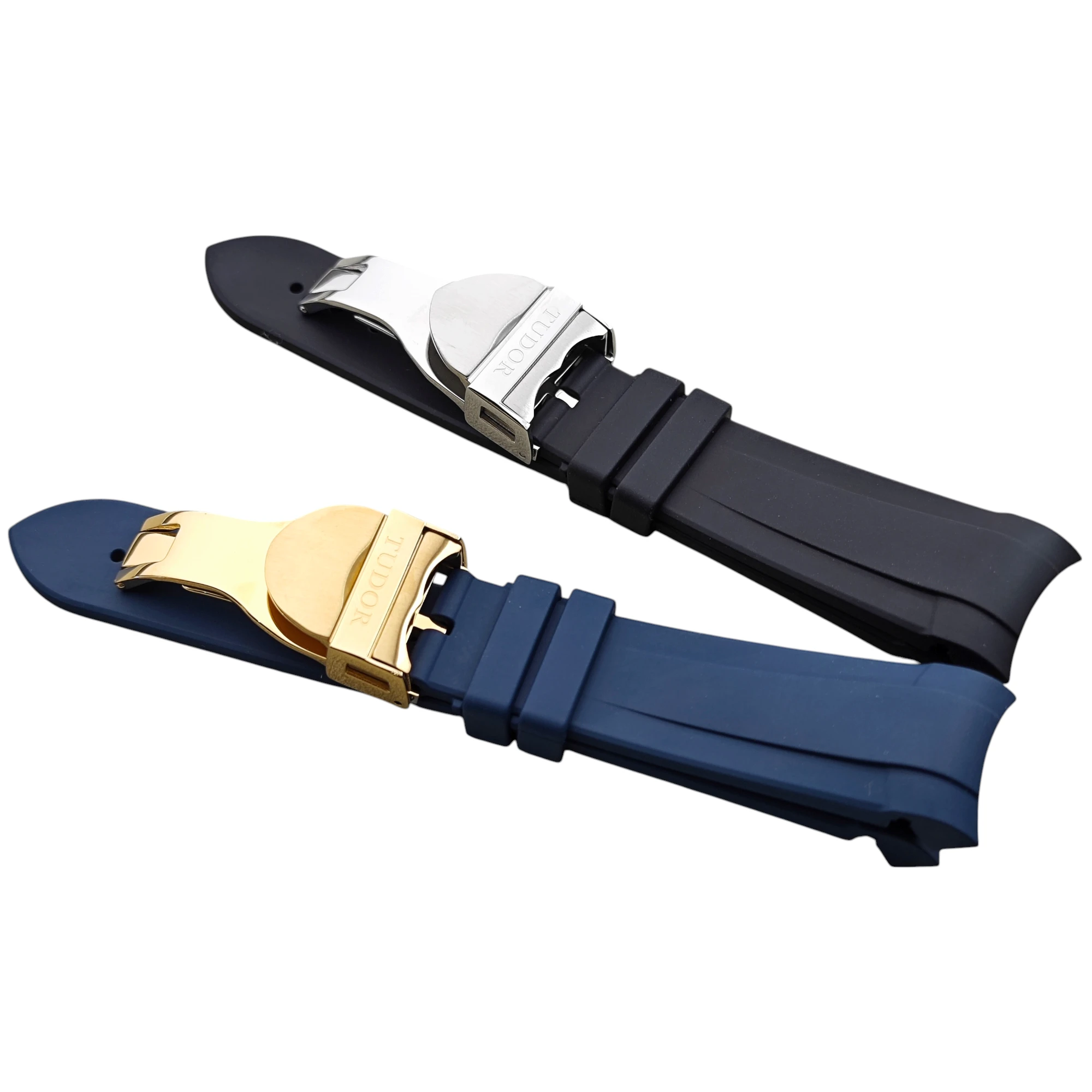
A curved-end strap (sometimes called a fitted or integrated end) is shaped to hug a specific case, filling the space between the lugs so the strap and watch read as one continuous line. On the right watch, the effect is seamless — exactly how the manufacturer intended it to look. The catch is that a curved end is model-specific: it is cut for a particular case profile, so it will not simply swap onto an unrelated watch the way a straight strap does.
Which watches need a curved end?
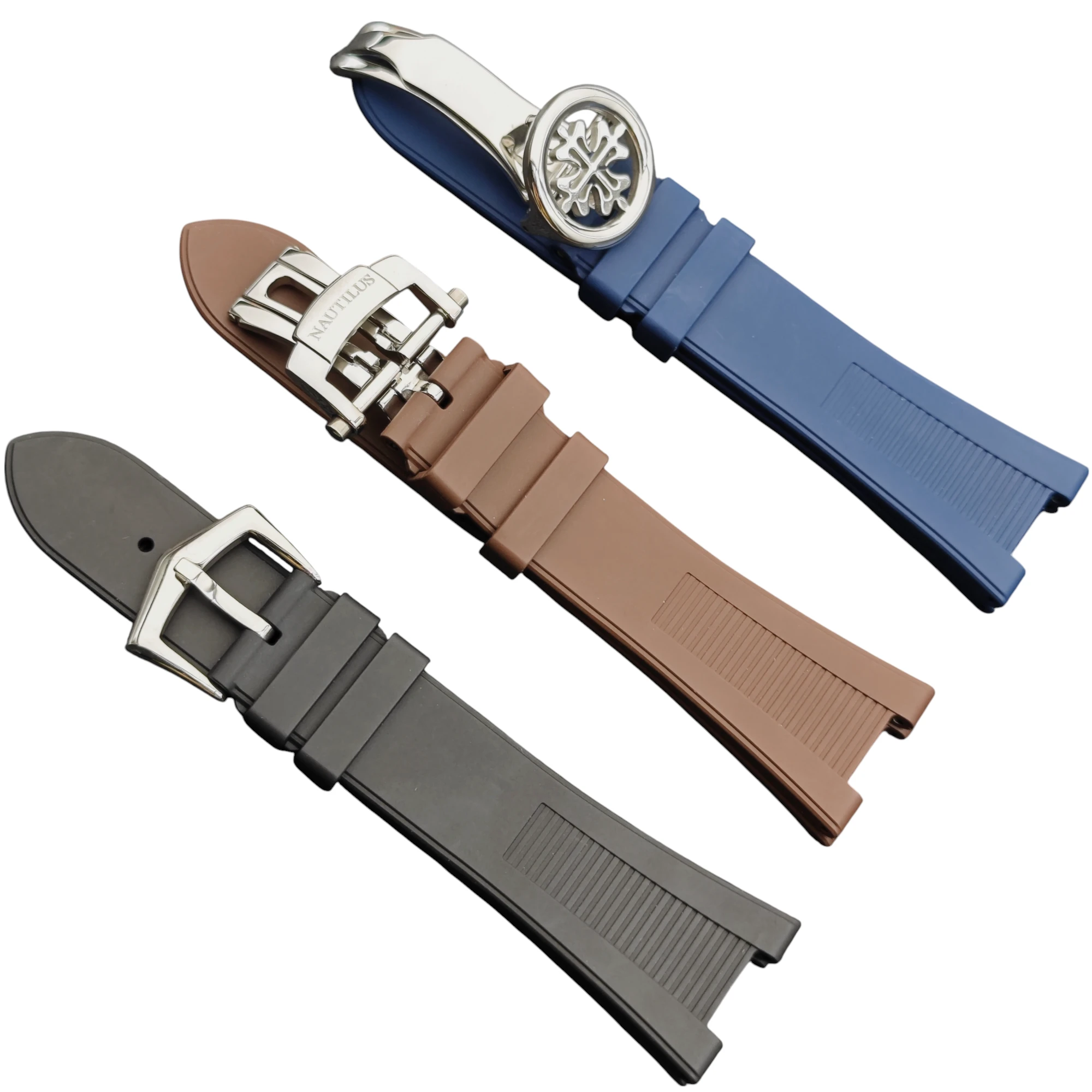
Broadly, any watch with an integrated case — where the band is part of the design rather than an accessory — needs a fitted end. That includes:
- Audemars Piguet Royal Oak & Offshore — fully integrated; needs a strap cut to the case. See AP straps.
- Patek Philippe Nautilus & Aquanaut — integrated profiles such as the 25x13mm Nautilus. See Patek straps.
- Hublot Big Bang & Classic Fusion — curved integrated fits like 25x19mm. See Hublot straps.
- Rolex with the Oysterflex look — the rubber-over-metal band uses curved end links. See Rolex Oysterflex straps.
- Many dive watches — such as the Tudor Black Bay and larger Omega Seamaster models, where a curved rubber strap sits flush against a round case.
By contrast, most traditional pilot, field and dress watches — and many divers — take a straightforward straight-end strap.
How to tell what your watch needs
Look at how the original strap or bracelet meets the case. If the band tucks into the case and follows its curve with no visible gap, you need a curved or fitted end. If the strap sits between open lugs with a normal spring-bar gap, a straight end is correct. When in doubt, the safest approach is to shop by your exact watch model rather than by lug width alone, so the end shape is matched for you. Our brand and model collections are organised this way, and our lug width guide helps with the measurement.
Why the fit matters so much
On an integrated watch, the case and band were designed together, so even a small gap breaks the line the designer intended — and on a luxury piece, that gap is the first thing the eye catches. A correctly curved strap restores the seamless, factory-fitted look and, just as importantly, keeps the strap secure and comfortable against the case. It is the single detail that separates a strap that elevates the watch from one that cheapens it.
The bottom line
If your watch has conventional lugs, a straight-end strap in the right lug width will fit and gives you maximum interchangeability. If your watch has an integrated case — a Royal Oak, Nautilus, Big Bang, an Oysterflex-style Rolex or many modern divers — you need a curved-end strap cut for that specific model. Match the end shape first, then choose your material and colour. When you shop by model, both are handled for you.
Frequently asked questions
What is the difference between a curved-end and straight-end strap?
A straight-end strap has a flat end and fits most watches with conventional lugs, needing only the correct lug width. A curved-end strap is shaped to a specific case so it sits flush with no gap, which integrated watches require.
Can I use a straight strap on an integrated watch?
You can physically fit one if the lug width matches, but it will usually leave a gap between the strap and the case and spoil the integrated look. A curved end cut for the model is strongly recommended.
How do I know if my watch needs a curved end?
Check the original band. If it tucks into the case and follows its curve with no gap, you need a curved end. If it sits between open lugs with a normal spring-bar gap, a straight end is correct.
Does lug width still matter for curved-end straps?
Yes. A curved-end strap still has to match the case width and profile of your specific model, which is why shopping by exact reference is the safest way to get both the end shape and the size right.