You’ve found a strap you love. It’s a fraction of the price of the original, it’s exactly the colour you wanted, and it would transform the watch on your wrist. And then the doubt arrives: this watch cost me thousands — should I really be putting a third-party strap on it?
It’s a fair question, and it deserves a straight answer rather than a sales pitch. The short version is that fitting a quality aftermarket strap to a luxury watch is safe, extremely common, and something a large share of serious collectors do routinely. But there are real risks worth understanding — they just aren’t the ones most people worry about.
This guide walks through what actually happens to your warranty, your resale value, and your water resistance when you fit a non-original strap, where the genuine hazards lie, and how to avoid every one of them.
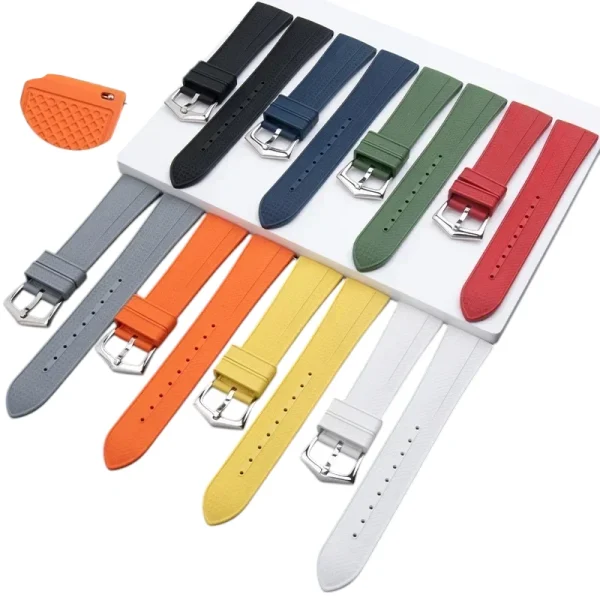
The Short Answer
A watch strap is a wearing part. Like the tyres on a car or the strings on a guitar, it’s designed and expected to be replaced during the life of the object. It’s an external accessory attached by two spring bars. It doesn’t touch the movement, it isn’t sealed into the case, and it plays no role in how the watch keeps time.
That’s why swapping it is one of the lowest-risk things you can do to a watch — considerably lower-risk than, say, having the case polished, which permanently removes metal. The risks that do exist come almost entirely from how the strap is fitted and what quality it is, not from the mere fact that it wasn’t made by the watch’s manufacturer.
Will It Void My Warranty?
This is the biggest fear, and it’s largely misplaced — but it needs a precise answer rather than a breezy one.
A manufacturer’s warranty covers the watch itself: the movement, and defects in materials or workmanship. Changing an external strap does not, on its own, dismantle or alter any of that. Manufacturers understand perfectly well that straps wear out and get replaced; it’s the expected life cycle of the component.
What a warranty will not cover is damage you cause during the swap. If you gouge a lug with a slipped tool, that scratch is yours. If a poor-quality spring bar fails and the watch hits the floor, that’s not a manufacturing defect. In other words, the warranty doesn’t evaporate because a third-party strap is present — but it also won’t rescue you from a botched strap change.
Two sensible precautions: check the specific terms of your own warranty card, since policies vary between brands, and keep the original strap or bracelet so you can refit it before any service visit. Many owners do exactly this as a matter of course.
Will It Hurt My Resale Value?
Here the answer is refreshingly clear, and it hinges on one word: keep.
An aftermarket strap does not damage your watch’s value, because the strap isn’t what’s being valued — the watch is. What does affect value is whether you can present the watch complete: original bracelet or strap, box, papers, and any extra links. A buyer paying serious money wants the full package.
So the collector’s rule is simple. Wear whatever strap you like for the years you own the watch. Put the original back on when you sell, and include everything in the sale. Do that and your aftermarket strap has cost you precisely nothing in resale terms — while having saved the original from years of sweat, sunlight, and wear it would otherwise have absorbed.
There’s a quiet irony worth noting: wearing an aftermarket strap daily often preserves resale value, because the pristine original spends those years safely in a drawer instead of slowly degrading on your wrist.
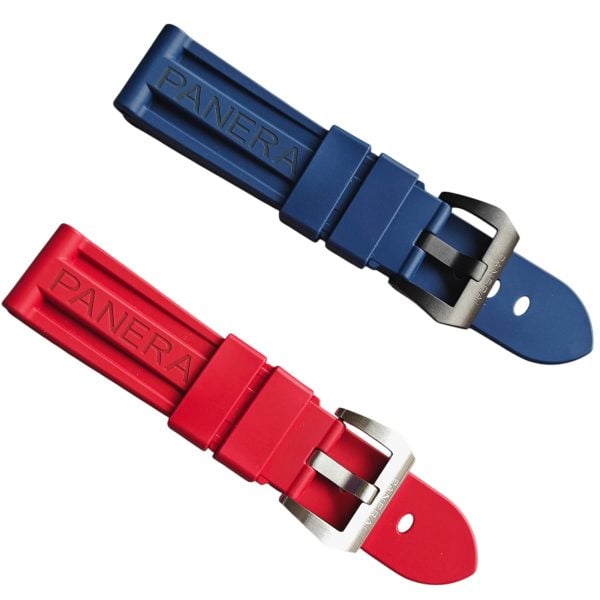
Will It Affect Water Resistance?
No — and this one surprises people.
Your watch’s water resistance comes from its gaskets: the seals at the caseback, the crown, and the crystal. The strap sits entirely outside that sealed system. It has no more bearing on water resistance than your shirt cuff does.
What matters for water resistance is that the case seals are intact and periodically serviced. A strap swap doesn’t open the case or disturb a single gasket. The only water-related consideration is choosing an appropriate material — if you’re swimming or diving, a rubber strap is the sensible pick, not because of sealing but because leather doesn’t enjoy saltwater. If that’s your use case, our guide to FKM vs. silicone rubber straps covers which rubber suits which conditions.
The Risks That Are Actually Real
Now the honest part. There are three genuine ways a strap change can go wrong, and all three are avoidable.
1. Scratching the case during fitting
This is by far the most common mishap. A spring bar tool that slips will leave a bright scar across a polished lug, and on a luxury watch that’s a genuinely expensive mistake. It’s caused by rushing, by using a screwdriver or knife instead of a proper spring bar tool, and by working on a hard surface.
How to avoid it: use a real spring bar tool, lay the watch face-down on a soft cloth, and take your time. If your watch has drilled lug holes, use them — pushing the bar from the outside is far safer than levering from the inside.
2. Cheap spring bars failing
The strap itself is rarely what fails. The spring bars are. A weak or badly made bar can lose tension, and if it releases while you’re wearing the watch, an expensive timepiece hits the pavement. This is the one risk with real financial consequences.
How to avoid it: never reuse tired spring bars, and don’t accept whatever nameless bars come free in a bargain-bin strap. Quality bars are inexpensive. On heavy watches, consider fat bars or shoulderless bars if that’s what the lugs are designed for.
3. The wrong size or fit
A strap that’s a millimetre too wide has to be forced between the lugs, stressing them; one that’s too narrow rattles and looks wrong. On watches with curved or integrated cases, a straight-end strap that doesn’t follow the case profile will leave an ugly gap and can rub the lugs.
How to avoid it: measure your lug width before ordering rather than assuming — our guide on how to measure your watch strap takes about a minute. Check whether your watch needs a curved end, and buy a strap designed for your specific model where the fit is critical.
Quality Is the Variable That Matters
Notice what none of those risks were about: the strap not carrying the watch brand’s name.
“Aftermarket” isn’t a quality grade — it just means “not made by the watch manufacturer.” It spans everything from a five-dollar strap of unknown provenance to a precisely engineered band made from the same class of material as the original, cut to the exact profile of your case.
The meaningful question isn’t original vs. aftermarket. It’s good vs. bad. A well-made aftermarket strap in a premium material, correctly sized for your model and fitted with sound spring bars, poses no more risk to your watch than the strap it came on — and frequently outperforms it in comfort and durability. A cheap, badly sized strap is a risk regardless of who made it.
What to look for: a specified material rather than the vague word “rubber,” a stated lug width and end type that matches your watch, model-specific fitment where the case shape demands it, and decent hardware.
The Verdict
Fitting an aftermarket strap to a luxury watch is safe. It won’t void your warranty on its own, it won’t dent your resale value provided you keep the original, and it has no effect whatsoever on water resistance. The real risks — a slipped tool, a failed spring bar, a wrong size — are all about execution and quality, and all three are straightforward to avoid.
Buy a good strap, get the size right, use proper tools and sound spring bars, and keep the original in a drawer. Do that and you get the best of everything: a watch that fits your life, an original preserved in perfect condition, and a fraction of the cost.
Browse straps made specifically for luxury watch fitments across our rubber, leather, and canvas collections.
You Might Also Like
- FKM vs. Silicone Rubber Watch Straps: What’s the Difference?
- How to Measure Your Watch Strap — June 30, 2025
- Is the Aftermarket Oysterflex Strap Worth It? — July 21, 2025