The bracelet is half of the Submariner. Rolex ships the watch on an Oyster bracelet, but the aftermarket opens up two very different looks — the sporty three-link Oyster and the dressier five-link Jubilee — plus the practical questions of which clasp, which end links and which lug width you actually need. This guide breaks down the choice for a Rolex Submariner, Daytona, GMT-Master or Datejust so you order the right bracelet the first time, and fit it correctly once it arrives.
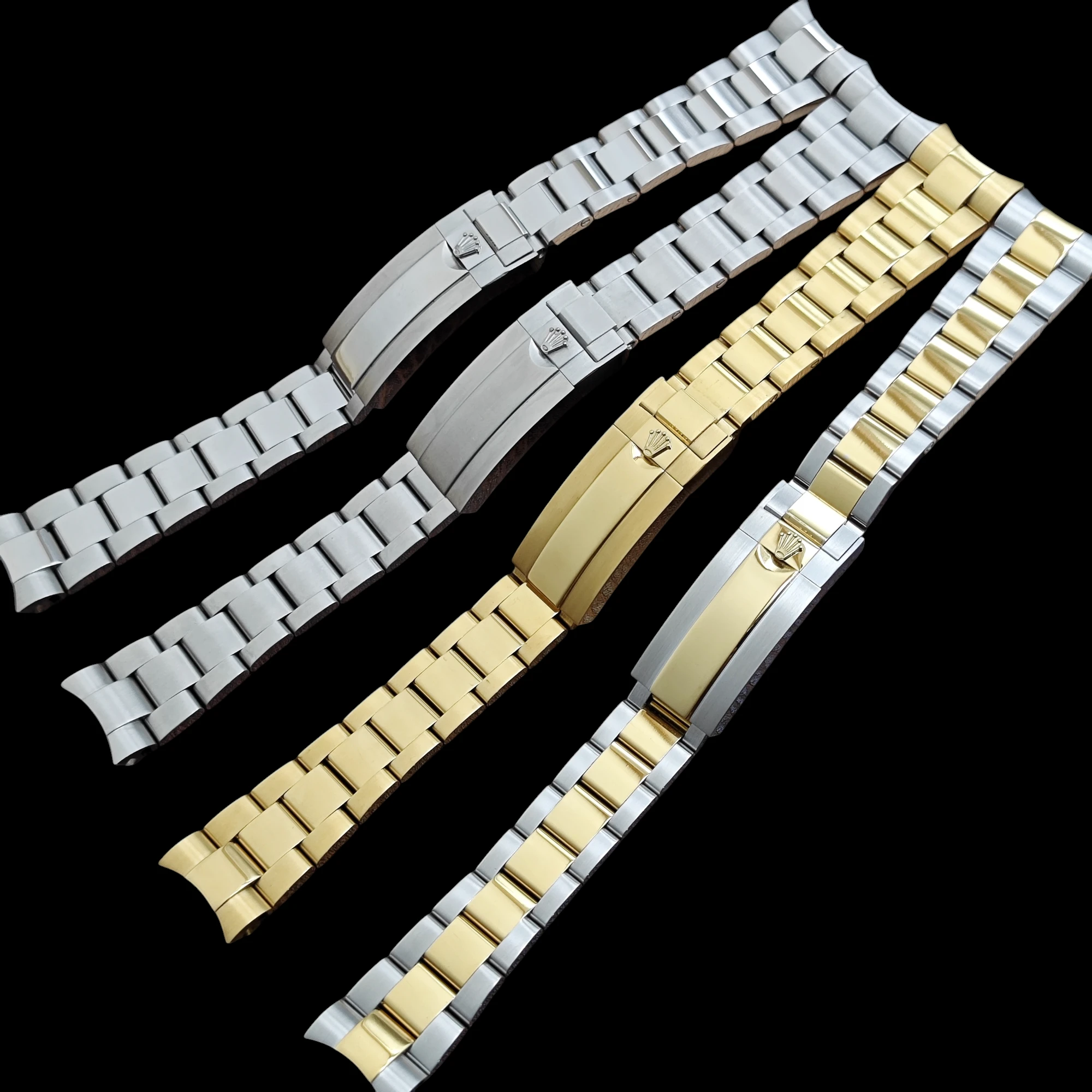
Oyster bracelet: the sports-watch standard
The Oyster is the three-link design that has defined Rolex sports watches for decades: two flat outer links flanking a single broad centre link, with polished bevels running against brushed surfaces. First introduced in the 1930s and refined ever since, it reads as robust, purposeful and understated — the way a Submariner or Sea-Dweller is meant to look. It is the default choice if you want the watch to sit exactly as Rolex intended, and its wide links make it especially comfortable on larger wrists.
Our aftermarket Oyster bracelet is built in 316L stainless steel with a Glidelock-style clasp, in Silver, Silver & Gold and Gold so you can match a steel, two-tone Rolesor or gold reference. The finishing follows the original recipe: brushed link tops with polished centre sections and chamfered edges, so it catches light the same way the genuine article does.
Jubilee bracelet: five-link refinement
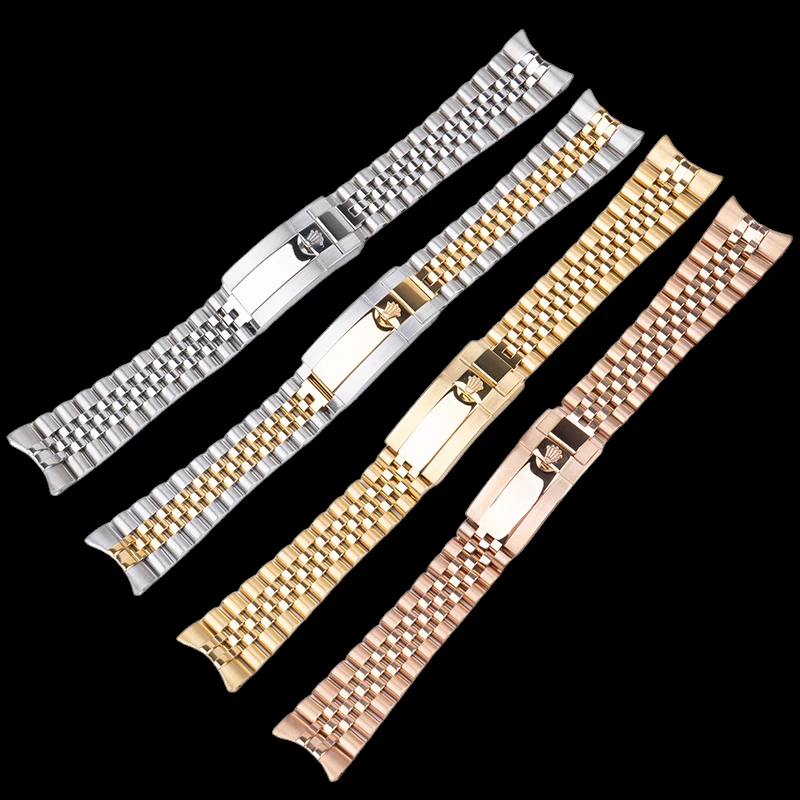
The Jubilee swaps the three-link layout for five links — three smaller polished centre links between two brushed outer rows. Designed in 1945 for the Datejust’s anniversary, it dresses a watch up and adds a subtle sparkle at the wrist without changing the case at all. On a Datejust it is the classic, born-together pairing; on a Submariner or GMT-Master it is the easiest way to soften a tool watch into something you can wear with a jacket. The smaller links also wrap the wrist a little more fluidly, which many owners find more comfortable for all-day wear.
See our Jubilee bracelet in Silver, Gold and Rose Gold to match your dial and case.
Oyster vs Jubilee: how to choose
Both are correct — the decision is about character and comfort, not right or wrong:
- Choose the Oyster for the original sports-watch look, maximum toughness, and a broad, planted feel on the wrist. It is the safest match for a Submariner, Sea-Dweller or Deepsea.
- Choose the Jubilee for a dressier, more refined wrist presence and a slightly more supple wrap. It is the natural pick for a Datejust and a characterful change of pace on a GMT-Master or Submariner.
The Glidelock clasp — why it matters
Both bracelets are available with a Glidelock-style clasp, and it is the single feature most worth having. It lets you extend or shorten the bracelet in roughly 2mm steps across an 8mm range — without removing links and without tools. Wrists swell through the day and in heat, and a Glidelock lets you dial in a comfortable fit in seconds. That matters even more if you wear the watch over a wetsuit cuff, a jacket sleeve, or simply want it looser in summer and snugger in winter. If you have ever taken a bracelet to a jeweller just to add half a link, this design solves it for good.
End links and fitment: getting a gap-free fit
A bracelet only looks right if the end links — the curved pieces that bridge the bracelet to the case — match your exact reference. Solid end links sit flush against the lugs with no gaps and give that dense, premium feel; hollow end links are lighter and cheaper but can rattle. Our bracelets use solid end links shaped for the correct case.
Fitting is straightforward with a spring-bar tool: rest the watch face-down on a soft cloth, compress the spring bar on one side of the end link, seat it into the lug hole, then release. Always tug both sides afterwards to confirm the bars are locked before wearing the watch. If you are not comfortable doing it yourself, any watchmaker can swap it in a few minutes.
316L steel and the right fit: 20mm vs 21mm
Marine-grade 316L stainless steel is the correct specification for a dive-watch bracelet — corrosion-resistant, able to hold the polished-and-brushed finish, and solid rather than hollow so it does not stretch over time. (Rolex’s own modern steel is 904L, prized for its slightly brighter shine and even better corrosion resistance; 316L is the industry-standard grade that delivers the same durability for daily wear.)
The one detail people get wrong is lug width. Most Submariner, Daytona, GMT-Master and Datejust references take a 20mm bracelet, but the newest 41mm Submariner (126610 and related) uses 21mm — for that one, use the 21mm Oyster bracelet instead. If you are unsure, our lug width guide lists it by model so you order the right size the first time.
Caring for your steel bracelet
Steel is low-maintenance, but a little care keeps it looking sharp. Rinse it with warm water after exposure to salt water, sweat or chlorine, and clean between the links occasionally with a soft brush and mild soapy water to lift trapped grime. Dry it thoroughly before wearing. Done every few weeks, this keeps the finish bright and the clasp mechanism running smoothly for years.
Which should you choose?
Go Oyster if you want the original sports look and maximum toughness; go Jubilee if you want a dressier, more refined wrist presence. Either way, choose the Glidelock clasp, confirm 20mm vs 21mm for your reference, and make sure the end links match your case. Browse the full Rolex collection for straps and bracelets, or read more Rolex strap guides on the blog.
Frequently asked questions
Can I put a Jubilee bracelet on a Rolex Submariner?
Yes. As long as the lug width and end links match your reference, a Jubilee fits the Submariner just as an Oyster does. It gives the watch a dressier, more refined look while keeping the same case and dial.
What lug width does my Rolex bracelet need?
Most Submariner, Daytona, GMT-Master and Datejust references use a 20mm bracelet. The newest 41mm Submariner uses 21mm. Measure the gap between the lugs, or check a lug width guide by model, before ordering.
What is a Glidelock clasp and do I need it?
A Glidelock-style clasp lets you fine-tune the bracelet length in small steps across a range of a few millimetres, with no tools and no link removal. It is the easiest way to get a perfect fit as your wrist changes through the day, so it is well worth choosing.
Is 316L steel good enough for a Rolex bracelet?
Yes. 316L is the marine-grade stainless steel used across most quality watch bracelets — corrosion-resistant, durable and able to hold a polished-and-brushed finish. Rolex uses 904L on its own pieces for a slightly brighter shine, but 316L delivers the same everyday toughness.