Updated October 2026 · By the BGStraps team
Quick answer: most modern Rolex bracelets adjust in two ways. Small changes are made at the clasp: the Glidelock on the Submariner slides open in roughly 2mm steps, and Easylink adds about 5mm. Bigger changes mean removing screwed links with a correctly sized screwdriver. Aim for a fit where one finger slides comfortably under the bracelet.
A Rolex bracelet that fits properly disappears on the wrist. One that doesn’t slides over the wrist bone in the morning and digs in by the afternoon. The good news is that almost every Rolex bracelet is adjustable in three different ways — the clasp, the micro-adjustment holes and the links themselves — and most owners only ever use one of them. This guide covers all three for the Oyster, Jubilee and Glidelock clasps, explains how many links a Jubilee actually has and why the number varies, and tells you what “stretch” really is and what can be done about it. By the end you should be able to size any Rolex bracelet at home in a few minutes.
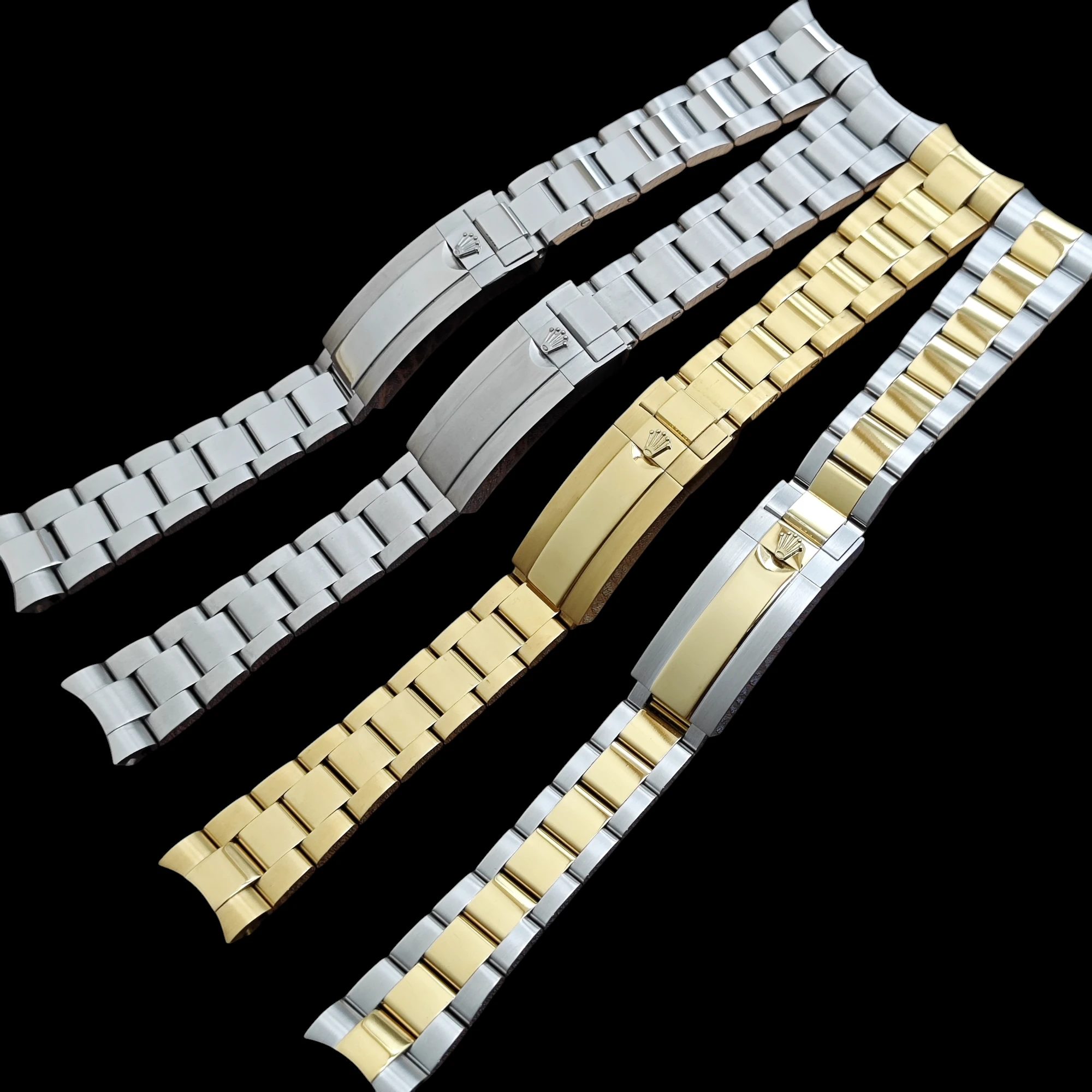
First, find out which clasp you have
Open the bracelet and look at the underside of the clasp cover. You will see one of three things:
- A toothed rail with a small sliding block — that is a Glidelock-style clasp. It adjusts without tools.
- A row of small holes in the end of the bracelet with a spring bar through one of them — that is a traditional micro-adjustment. It needs a pin or a spring-bar tool.
- Neither — then the only adjustment is removing or adding links.
Always start with the smallest adjustment available and work up. Link removal is the last resort, not the first move, because it is the only one that changes the bracelet permanently.
Adjusting a Glidelock clasp (no tools)
This is the easiest adjustment in watchmaking and it takes about ten seconds:
- Open the clasp cover fully so you can see the toothed rail underneath.
- Lift the sliding block slightly — it releases from the teeth with light finger pressure.
- Slide it along the rail. Each notch is roughly 2mm, with around 8mm of total travel.
- Let it drop back into the teeth, close the cover and check the fit.
Because it is so quick, a Glidelock lets you run the bracelet looser on a hot afternoon and snugger in winter, or open it up to wear over a jacket cuff. If your current bracelet doesn’t have one, most of our Rolex bracelets are built with a Glidelock-style clasp, and it is the single upgrade owners notice most in daily wear.
Using the micro-adjustment holes
Older clasps adjust by moving the spring bar between two or three holes, which shifts the length by 2–3mm per hole. Rest the watch face-down on a soft cloth, compress one end of the spring bar with a spring-bar tool or a pushpin, lift it free, move it to the next hole and let it seat with an audible click. Tug the bracelet afterwards to confirm it is locked. Work over a tray or a towel — spring bars are small and they travel a long way when they escape.
Removing links: the bigger adjustment
If the clasp adjustment isn’t enough, remove links. Each link is usually 8–10mm, so this is the coarse adjustment and the clasp handles the fine tuning afterwards.
- Look at the inside of the bracelet for small arrows. They show the direction the pins must be pushed out.
- Support the bracelet on a link-removal block and push the pin out in the arrow direction with a pin pusher.
- Remove links evenly from both sides of the clasp so the watch head stays centred on top of the wrist.
- Reassemble, press the pins fully home, then pull firmly on both halves to confirm they are seated.
Some bracelets use screw pins rather than push pins. For those you need a fine flathead screwdriver, roughly 1.2–1.6mm for most, matched exactly to the slot — an undersized blade chews the screw head. Keep the removed links somewhere safe. They are part of the bracelet’s value, and you may want them back if your wrist changes or you sell the watch.
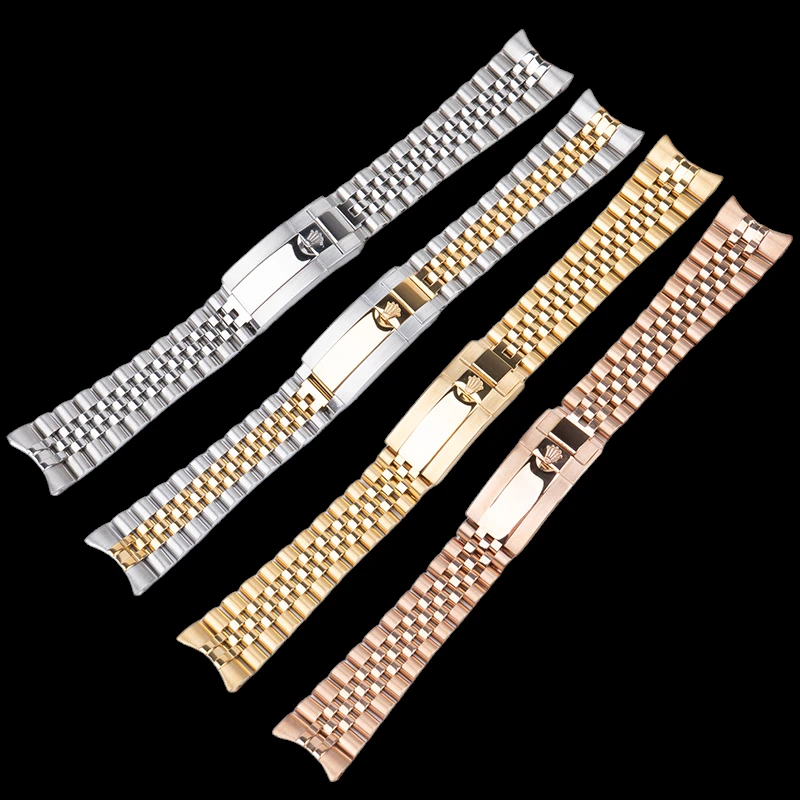
How many links does a Rolex Jubilee have?
It is one of the most searched sizing questions, and the honest answer is that it varies. The Jubilee is a five-piece design: two brushed outer rows with three smaller polished links running down the centre. Because each “link” across the width is made of five separate pieces, the number people usually mean is the number of link rows along the length — not the total count of metal pieces, which runs into the hundreds.
A full-length Jubilee typically has somewhere in the region of a dozen removable link rows per side before you reach the clasp, and the exact number depends on the reference, the case size and the clasp type. That is why no single figure is correct for every bracelet. What matters in practice is the finished length, not the count. If you are buying second-hand, ask for the total length in millimetres rather than a number of links — our Rolex bracelets list it in the product details for exactly this reason.
The Jubilee is sized exactly like an Oyster: remove whole link rows evenly from both sides of the clasp, then use the clasp for the last few millimetres. It simply has more, smaller links, which gives you finer steps.
How tight should a Rolex bracelet be?
Aim for a fit where the watch stays on top of your wrist but you can still slide a fingertip under the bracelet. It should move a few millimetres when you shake your arm, not swing around the wrist. Check the fit at the end of the day rather than first thing in the morning — wrists swell by a millimetre or two over the course of a day, and a bracelet sized at 8am will feel tight by evening.
Does a Rolex bracelet stretch?
Steel does not stretch, but bracelets do develop play. Every link row has a pin, and over years of wear the tiny clearances at each pin add up into what owners call stretch. Because the Jubilee has more links than an Oyster, it shows this sooner. Play cannot be polished out or adjusted away; it is fixed by replacing the worn links or the bracelet.
The best prevention is keeping the bracelet clean. Every few weeks, wash it in warm water with a drop of mild soap, working between the links with a soft toothbrush, then rinse and dry it thoroughly. Do this after sea swimming in particular — salt and sand trapped between the links are what grind the pins.
Adjusting a rubber or leather Rolex strap
Straps adjust at the buckle rather than the clasp. On a folding buckle you set the hole once and then simply open and close it. If you sit between two holes, wear it in the looser position in warm weather. Our Oysterflex-style straps come in several lengths, so if you have been running out of holes in either direction, a shorter or longer strap solves it permanently. There are also separate buckles and clasps if yours is worn or the length adjustment has stopped holding.
When to let a watchmaker do it
Clasp and micro-adjustment work is safe to do at home. Link removal on a bracelet you care about is also straightforward, but a slipped tool leaves a scratch that doesn’t polish out easily. If the pins are screw-type, or the bracelet is gold or two-tone, it is worth paying a watchmaker the few minutes it takes. Before ordering any replacement, check your lug width against our lug width guide by model, and if you need to take the bracelet off entirely, see our guide on removing and replacing a Rolex bracelet.
Frequently asked questions
How do I adjust a Rolex bracelet without tools?
If your clasp has a Glidelock-style rail, open the clasp cover, lift the sliding block off the teeth, slide it along the rail and let it drop back in. That gives you roughly 8mm of adjustment in 2mm steps with no tools at all. Traditional micro-adjustment holes and link removal both need a spring-bar tool or a pin pusher.
How many links should I remove from a Rolex bracelet?
Start with one link at a time, taken evenly from both sides of the clasp so the watch stays centred on your wrist. Each link is usually 8–10mm, so removing two can take the bracelet from loose to tight. Use the clasp micro-adjustment for anything finer.
How many links does a Rolex Jubilee bracelet have?
It varies by reference, case size and clasp, so there is no single number. A full-length Jubilee has roughly a dozen removable link rows per side before the clasp. When buying or sizing one, go by total length in millimetres rather than link count.
How tight should a Rolex bracelet be?
You should be able to slide a fingertip between the bracelet and your wrist, with the watch head staying on top of the wrist rather than rolling to the side. Size it at the end of the day, because wrists swell slightly as the day goes on.
Does the Rolex Jubilee bracelet stretch?
The steel itself does not stretch, but play develops at each pin over years of wear, and the Jubilee has more pins than an Oyster. The result feels like stretch and cannot be polished out — worn links or the bracelet have to be replaced.
Can I adjust a Rolex bracelet myself?
Yes. Clasp and micro-adjustment changes are simple and safe. Link removal is also manageable with a link-removal block and a pin pusher, but if your bracelet uses screw pins or is gold or two-tone, a watchmaker will do it in minutes without risking a scratch.
More Rolex guides: see our complete guide to Rolex bracelets and straps for every option in one place.